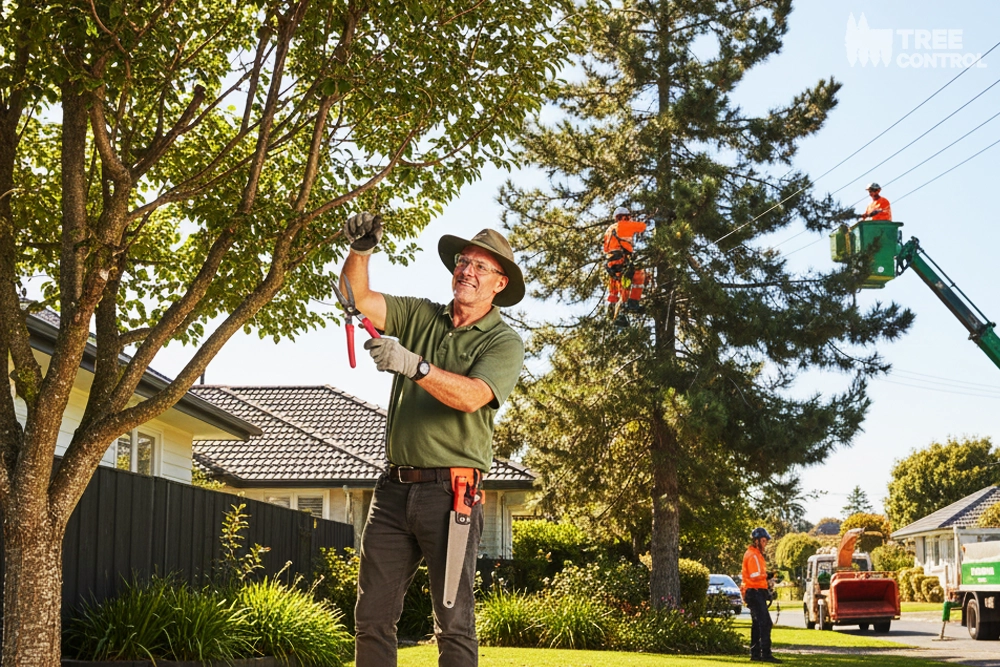
Overgrown branches can quickly become a safety concern, making tree trimming a critical aspect of responsible property care. When trees grow too close to power lines, roofs, or driveways, they risk damaging property and creating hazards during strong winds or storms. While many property owners attempt to manage the problem themselves, improper tree cutting weakens the tree. This mistake may be simple, but it actually increases the chance of accidents.
That is why knowing how to perform safe, proper trimming matters. It is not only about appearance but also about keeping trees strong and balanced while reducing the chance of accidents. Some trimming tasks can be done at home with care, but others require the professional skill and tools of qualified arborists.
The Unseen Risks of Neglected Trees
Neglecting regular tree trimming can lead to more than untidy gardens. Uncontrolled branches may touch roofs, fences, or nearby power lines, leading to electrical faults or property damage. Heavy limbs that go unchecked might also break under pressure, especially during wet or windy conditions.
Beyond safety risks, overgrown trees can block sunlight from reaching your lawn or garden. This affects the growth of nearby plants and can also cause uneven development in the tree itself. Regular trimming allows each tree part to gain enough light and air, promoting even growth and stronger branches.
Why Tree Trimming Matters for Health and Safety?
Trimming is crucial to a tree’s overall health. It helps remove weak, diseased, or dead branches that might otherwise spread decay. By concentrating on selective cuts, you enable nutrients to reach stronger limbs. This improves tree stability and longevity.
From a safety standpoint, trimming also prevents branches from hanging over structures or public areas. This keeps your home and family safe from falling debris. Balanced and properly maintained trees are far less likely to drop limbs or lean dangerously during severe weather.
Starting Right: The Basics of Safe Tree Trimming at Home
If you want to handle small tree trimming tasks yourself, the key is to work carefully and with purpose. The aim is to retain a balanced, healthy structure without overcutting or stressing the tree.
Here are a few simple guidelines to help you start safely and effectively:
- Identify weak or damaged branches first. Look for cracks, deadwood, fungal growth, or limbs that rub against each other. Removing these spots helps the tree direct nutrients to stronger branches, reducing the risk of breakage during high winds or heavy rain.
- Avoid cutting too close to the trunk. Leaving a small collar where the branch meets the trunk allows the tree to heal naturally. Cuts that are too close can leave open wounds, increasing the risk of decay spreading.
- Maintain the tree’s natural shape. Trim lightly to keep the tree’s balance. Avoid removing huge sections at once, as uneven cuts can make the tree unstable or prone to leaning over time.
- Trim at the right time of year. In New Zealand, most trees respond best to trimming during late winter or early spring, when growth is still dormant. This reduces stress and encourages healthy new growth when the season changes.
- Work within safe reach. If a branch is too high or thick to manage comfortably, do not climb or stretch to reach it. This prevents falls and accidents, and larger branches are often best left to trained arborists.
Safety First: Precautions Every Home Trimmer Should Take
Every trimming job begins with proper preparation. Before you begin, look around the area for hazards such as uneven ground, hidden roots, or nearby electrical lines. Make sure children and pets are kept at a distance to prevent distraction or injury.
A few basic safety checks should always come first:
- Wear the right protective gear. Gloves, safety glasses, and strong footwear save you from splinters and falling debris. A helmet is useful for larger trees or when working under heavy limbs.
- Check your footing. Stable ground helps prevent slips. Do not use unstable ladders or stand on uneven surfaces.
- Clear your surroundings. Keep tools organised and give enough space to move freely while trimming.
Taking these precautions helps reduce accidents and allows you to focus on completing each task efficiently and safely.
Picking the Right Tools for Easy Trimming
The quality and suitability of your equipment or gear can make a huge difference in both outcomes and safety. For small branches, pruning shears or loppers are often enough for better control and minimal bark damage. For thicker sections, a handsaw has greater cutting strength without the risks associated with powered tools.
When dealing with medium- to tall trees, a pole saw is used to reach higher branches. These tools are useful but demand good control and awareness of surroundings. Larger or more complex trees may need a chainsaw, but these should only be operated by trained professionals. Chainsaws are powerful tools that can cause severe injury when misused. If a job requires one, it is safer to contact a qualified arborist rather than attempt it yourself.
Technique Matters: How to Trim Trees Correctly?
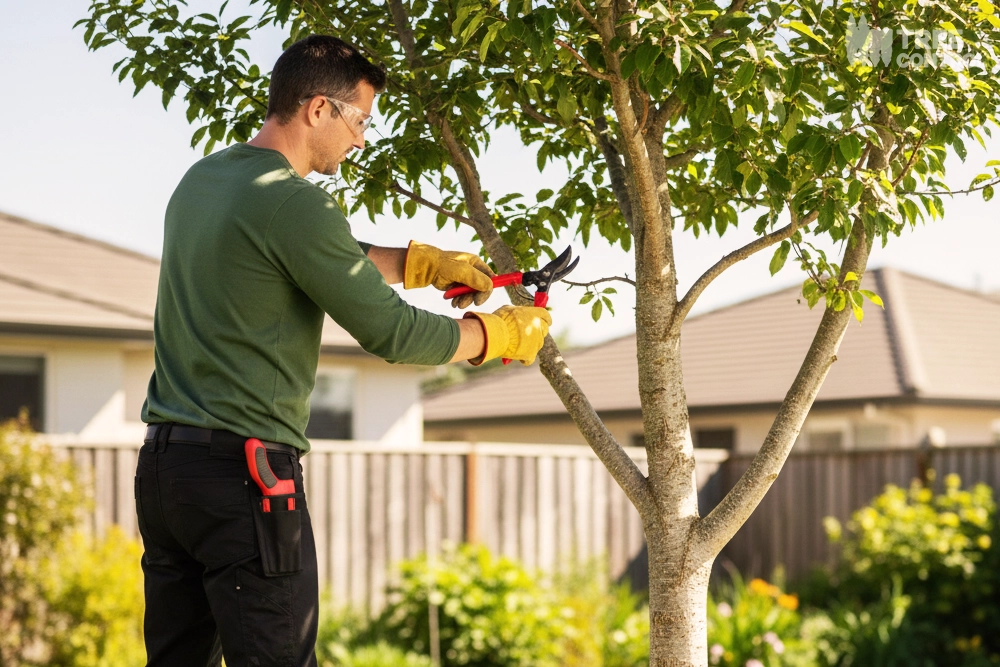
Good technique is the backbone of safe and effective trimming. Each cut should serve a purpose: either to improve shape, remove hazards, or support healthy growth.
Follow these key steps to keep your trees strong and avoid damage in the long run:
Start with Small and Controlled Cuts
Begin by removing smaller branches first, rather than tackling large limbs right away. This helps keep the tree balanced and prevents sudden stress on its main structure. Working in stages also allows you to assess how the tree responds, ensuring you don’t remove more than necessary.
Focus on Dead or Weak Branches Before Shaping
Always identify dead, cracked, or crossing branches early in the process. These parts should be removed first to stop decay from spreading to healthy areas. Once cleared, you can move on to shaping the canopy for improved airflow and even sunlight exposure across the tree.
Avoid Cutting Too Close to the Trunk
When trimming, leave a small collar where the branch meets the trunk. This natural ridge contains healing tissue that helps the tree effectively close its wound. Cutting too close can strip away this layer, slowing recovery and creating open entry points for disease and insects.
Use the Two-Step Cutting Method for Heavy Branches
Large or heavy branches need a careful approach to avoid tearing the bark. Make a shallow notch underneath the branch a few centimetres away from the trunk before cutting from the top just beyond that notch. This two-step method prevents the weight of the limb from pulling and damaging the surrounding bark as it falls.
Keep Your Movements Steady and Measured
Controlled, steady movements ensure that every cut is accurate. Rushing through trimming can cause uneven cuts or accidental slips that damage the bark. Take time to step back occasionally and check the overall shape, keeping the tree’s natural appearance intact.
Stay Within Safe Reach at All Times
Never stretch, lean, or climb higher than you can safely manage. Working beyond a comfortable reach increases the chance of falls or tool accidents. If a branch is too thick or positioned awkwardly, it’s safer to call arborists who have the proper training and equipment for the task.
Caution Alert: Common Tree Trimming Mistakes to Avoid
Even simple jobs can go wrong without care. Some homeowners make cuts and trims that harm rather than help their trees. Understanding common tree trimming mistakes to avoid can save you time and protect your trees from damage:
- Overcutting branches. Removing too many branches at once weakens the structure and lessens the tree’s ability to produce food through photosynthesis. Gradual tree trimming keeps the tree stable and allows it to recover properly between cuts.
- Using dull or unsuitable tools. Dull or damaged blades tear the bark instead of cutting cleanly, leaving rough edges that heal slowly. Always keep your tools sharp, clean, and well-maintained to promote faster recovery.
- Trimming at the wrong time of year. Cutting during active growth periods or extreme temperatures can shock the tree and invite disease. Late winter or early spring is generally the safest time for most New Zealand tree species.
- Ignoring branch structure and growth direction. Cutting branches without considering their natural angle can cause imbalance and uneven regrowth. Aim to keep a symmetrical form so that weight is evenly distributed across the canopy.
- Removing too much from the top. Excessive top trimming, often called “topping,” can lead to weak shoots and rapid, unstable regrowth. Instead, thin out the canopy gradually to let in light without overexposing the trunk.
- Failing to check for hidden decay or pests. Cutting into weakened wood can cause breakage and may spread the problem further. Before cutting, inspect the tree for signs of internal rot or insects.
- Leaving stubs after cutting. Branches cut too far from the trunk leave stubs that do not heal properly. These can become entry points for fungi or insects, weakening the entire tree.
- Neglecting cleanup after trimming. Leaving trimmed branches or sawdust near the base of the tree can attract pests or block air circulation. Dispose of debris properly and keep the area clear to support healthier soil conditions.
When Is It Time for Professionals to Step In?
While basic maintenance can be handled at home, there are times when tree trimming requires expert attention. Large trees, especially those over ten metres tall, require equipment and experience beyond most home setups. The same applies to trees located near power lines, roads, or structures. In these cases, the risks are too high for untrained handling.
If your tree shows decay, cracks, or instability, it is best to get an assessment from an arborist. They can identify hidden weaknesses that may not be visible from the ground. Knowing when to call a professional arborist NZ avoids accidents and safeguards your property from potential harm. They also have insurance coverage and follow safety standards, which adds another layer of protection.
The Huge Advantages of Professional Tree Trimming
Working with qualified tree care experts offers more than convenience. Certified experts know how to trim each tree correctly, balancing appearance, safety, and growth. Their experience ensures that every cut supports the tree’s health rather than compromising it.
The benefits of professional tree trimming also include consistent care and compliance with local council guidelines. Tree specialists handle the full process, from inspection and controlled cutting to debris removal. They also have specialised equipment that speeds up and improves the accuracy of the work.
For busy homeowners and property owners, a helping hand from tree trimming services saves time and dodges costly mistakes. It also provides peace of mind, knowing that your trees remain safe and healthy for years to come.
Why Hiring Experts is Worth Every Penny?
It is natural for homeowners to compare the cost of professional work with the cost of do-it-yourself (DIY) efforts. However, once safety, time, and potential damage are at stake, expert services prove more practical. Arborists have access to lifting platforms, safety gear, and specialised cutting tools that allow them to handle difficult jobs efficiently.
Moreover, professional work also complies with local safety rules and insurance requirements. This means that if a branch accidentally damages nearby property, the situation is managed under proper coverage. Attempting the same job without the right equipment or knowledge can lead to personal injury or costly repairs.
Seeking assistance from tree trimming experts means the job is done right the first time. You avoid repeated trimming or patching mistakes later on. For trees that add long-term value to your property, that is actually a smart investment.
Tree Care Investment: A Key to Healthier Trees and Safer Homes
Healthy trees add value to every property, but safety should always come first. Trimming them correctly prevents damage and fosters better growth. Taking time to inspect, plan, and trim trees near your property is not just an option but a good investment that makes all the difference.
For tree care jobs that need precision or advanced tools, it is best to contact professionals who handle such tasks every day. At Tree Control, we specialise in controlled tree trimming and removal for residential and commercial clients across New Zealand. Our focus on safety, quality, and tidy site management helps you keep the surroundings secure while preserving tree health.
Tree care is a shared responsibility between routine maintenance and professional expertise. By drawing the line on when to manage small tasks yourself and when to call pros, you protect both your property and the trees that shape it. With consistent attention and wiser choices, your space will stay safe, balanced, and thriving through careful tree trimming.